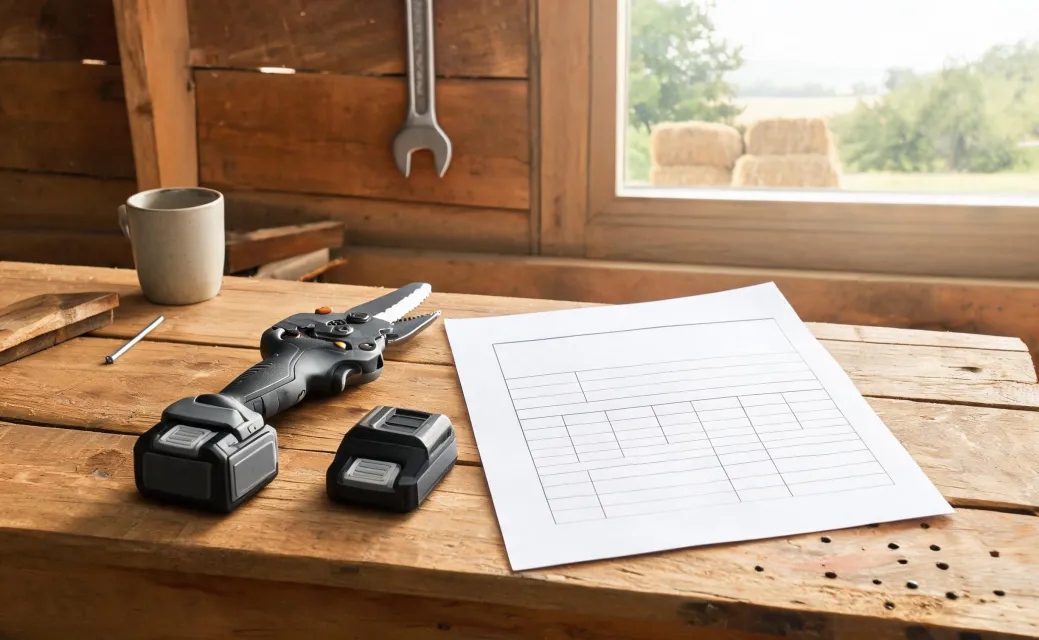
On the Milwaukee 2534-20, you set full or half capacity by opening the blades, pushing the mode select button to toggle between the modes, then holding the lock-off button and pressing the trigger to lock in the choice. The blades must open to initiate mode selection, so the order of the steps matters more than how hard you press the button.
This guide covers that model only, as described in its operator manual, and it stays with what the manual states about blade opening and cut type. It carries no diameter limits, power ratings or speed numbers for the 2534-20, because the manual text does not supply them; treat any figure you meet elsewhere as a separate claim to trace back to its own document before you plan work around it.
Day One Blade Position and Hand Placement
The starting position is blades open. The manual pairs that requirement with a plain warning: the blade is sharp, so keep hands away from all cutting edges and moving parts. A head left closed after the last cut is not a valid place to begin, and neither is a head you hold apart with your fingers while you reach for the button. Bring the blades open, and keep your hands off the cutting edges while you do it.
Getting this wrong does not look like a setup error. Press the mode button with the blades closed and selection never starts, so the shear reads as unresponsive, and a new owner spends the first afternoon suspecting the battery, the button or the tool rather than the blade position. Nothing is broken; the first step was skipped.
Full Capacity for Larger Limbs, Half Capacity for Repetition
Full Capacity mode opens the blades all the way for larger diameter pruning. Half Capacity mode opens the blades partially for smaller, more repetitive cuts. That is the whole of the distinction the manual draws, and it uses two terms: how far the blades open, and what kind of cut the mode is meant for.
Read the two modes as cut-matching choices and the setup stays simple. You are not selecting a power level, because the manual assigns no rating to either mode, and you are not selecting a blade size, because no diameter threshold appears in that text. What changes is blade travel, and what you match it to is the branch in front of you and how many times you will repeat the cut.
Two consequences follow. A mode change belongs between cuts, when the head is open, not halfway through a limb, since the blades have to open before selection will initiate at all. And if a cut feels like it belongs to the other category, switching is a deliberate act performed at the button and the trigger, not something the shear decides for you mid-cut.
First Week Toggle Then Lock the Mode
During the first week, the sequence becomes habit only if you keep the two actions separate. Push the mode select button to toggle between the modes; the button alone changes which mode is selected. Hold the lock-off button and press the trigger to lock in the desired mode. Toggling without locking leaves the job half done, and stopping at the button is the habit that survives into month two when nobody corrects it early.
You confirm the mode at the blades, not at your thumb. With the blades open, one mode opens them all the way and the other opens them partially, so a full-open head after selection means full capacity and a partial opening means half. Run that glance with your hands away from all cutting edges and moving parts, and confirmation costs a second instead of a test cut.
The lock-off button explains why the routine feels longer than expected the first few times. Two controls get operated together after the mode is chosen, and an operator who releases the lock-off too early ends up with no lock and assumes the mode did not take.
Practice Half Capacity on Small Repeat Cuts
Suppose a grower spends the back half of the first week on a row of small, repetitive cuts, the kind that fill a hand pruner's day: light wood, many cuts, the same motion over and over. That row is where half capacity belongs, and it is where an operator can watch the blades open only partially on each cycle and learn what the mode actually looks like in use.
Half capacity is not a low-power fallback you drop into when the battery is tired or the wood argues back. Full capacity is not the default setting you leave alone until something forces a change. The manual's split runs on cut type and blade opening: larger diameter pruning on full, smaller repetitive cuts on half. In the hypothetical row above, half is the right call because the cuts are small and repeated, not because the shear needs rescuing.
Practicing there also builds the correct switching habit. Finish the cut, let the blades come open, then toggle and lock. Trying to change modes with a branch in the jaws and the blades closed is exactly the mistake this practice is designed to prevent, and it is a harmless mistake to make on light wood rather than on the limb that decides the season.
Audit Mode Choices After One Month
A month in, the useful question is whether the mode choices still match the manual's two categories, not how quickly the crew is cutting. Walk a block and, for each pass, name the cut out loud: larger diameter pruning, which is full capacity, or smaller repetitive work, which is half. A mode that does not match the cut it is being used on is the finding you are after.
The check itself is cheap. Before the cut, glance at blade opening: full opening means full capacity, partial means half. If the opening does not match the work in front of the shear, stop and reset with the button and trigger sequence rather than pushing through the rest of the row.
What this audit will not tell you is productivity. Counting cuts per hour or comparing days produces numbers the manual never addresses and that this guide has no basis to interpret, so keep the review to mode choice and blade opening. That slice of setup is the part an operator can genuinely confirm.
Who Should Not Copy This Setup Across Models
None of this transfers to a different shear. The steps come from the Milwaukee 2534-20 operator manual, and another model or brand can put mode selection on a different control, require a different precondition, or skip the mode choice altogether. Borrowing the button order without the matching document is how a working tool gets blamed for a sequence that was never written for it.
If your shear is not a 2534-20, the right reference is that tool's own manual, and the questions to bring to it are simple: what has to be true before selection starts, which control performs the toggle, and which control confirms it. Those three answers differ by model, and no amount of familiarity with one machine substitutes for them.
This setup is not for a grower who wants one universal mode sequence to memorize across a mixed fleet; it is for a 2534-20 owner with that model's manual in hand, matching full or half capacity to the cut in front of the shear and confirming it at the blades before the trigger goes down.
